
The pancreas secretes / अग्न्याशय स्रावित करता है
(1) Insulin / इंसुलिन
(2) Bile juice / पित्त रस
(3) Peptic juice / पेप्टिक रस
(4) None of these / इनमें से कोई नहीं
(SSC CAPFs SI, CISF ASI & Delhi Police SI Exam. 22.06.2014)
Answer / उत्तर :-
(1) Insulin / इंसुलिन
Explanation / व्याख्या :-
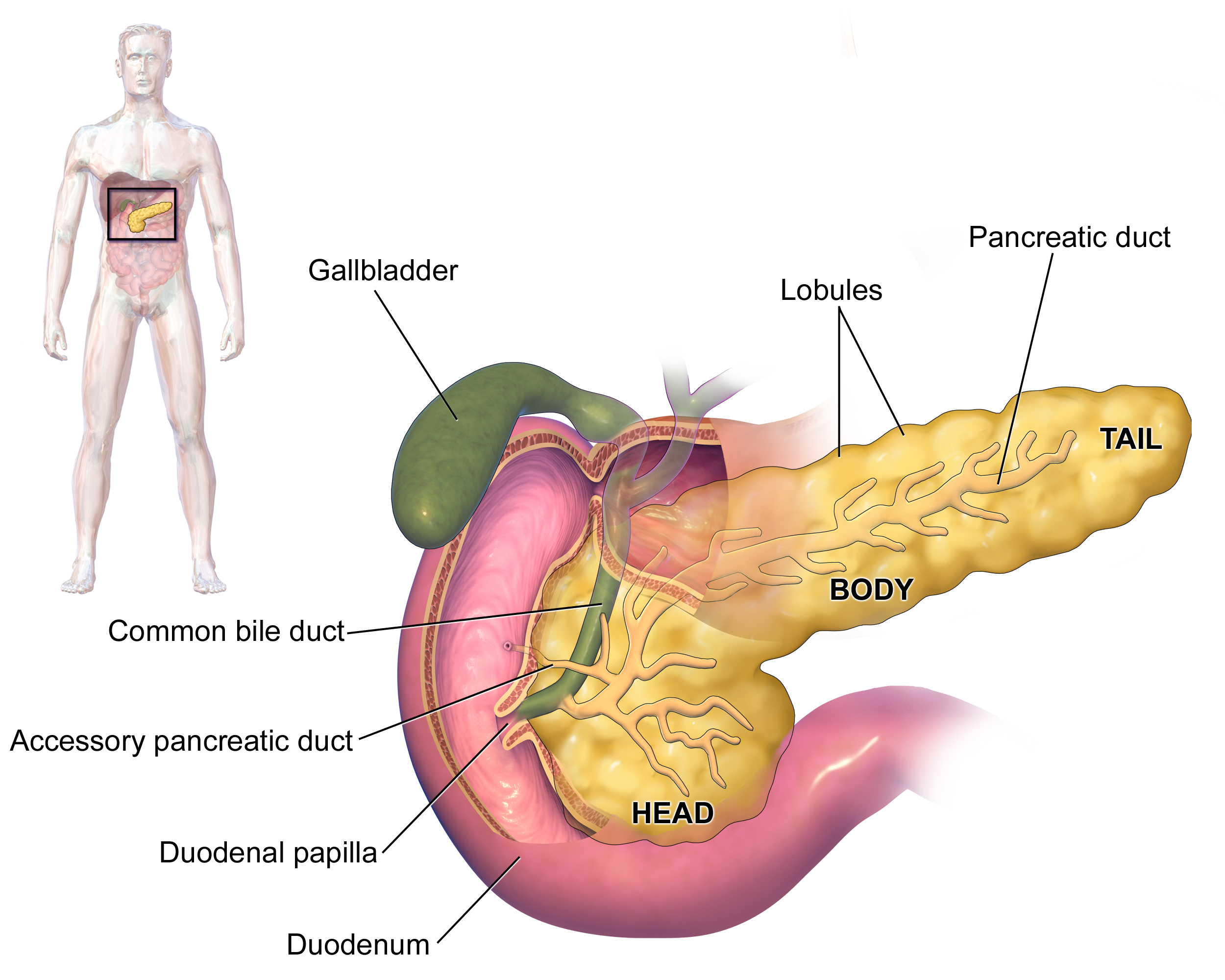
Functioning as an exocrine gland, the pancreas excretes enzymes to break down the proteins, lipids, carbohydrates, and nucleic acids in food. Functioning as an endocrine gland, the pancreas secretes the hormones insulin and glucagon to control blood sugar levels throughout the day.
The pancreas is a gland organ. It is located in the abdomen. It is part of the digestive system and produces insulin and other important enzymes and hormones that help break down foods.
The pancreas has an endocrine function because it releases juices directly into the bloodstream, and it has an exocrine function because it releases juices into ducts.
Enzymes, or digestive juices, are secreted by the pancreas into the small intestine. There, it continues breaking down food that has left the stomach.
The pancreas also produces the hormone insulin and secretes it into the bloodstream, where it regulates the body’s glucose or sugar level. Problems with insulin control can lead to diabetes.
Other possible health problems include pancreatitis and pancreatic cancer.
Features
The pancreas is an organ 6 to 8 inches long. It extends horizontally across the abdomen.
The largest part lays on the right side of the abdomen where the stomach attaches to the first part of the small intestine, the duodenum.
At this point, the partially digested food passes from the stomach into the small intestine, and it mixes with the secretions from the pancreas.
The narrow part of the pancreas extends to the left side of the abdomen next to the spleen.
A duct runs the length of the pancreas, and it is joined by several small branches from the glandular tissue. The end of this duct is connected to a similar duct that comes from the liver, which delivers bile to the duodenum.
Around 95 percent of the pancreas is exocrine tissue. It produces pancreatic enzymes to aid digestion. A healthy pancreas makes about 2.2 pints (1 liter) of these enzymes every day.
The remaining 5 percent comprises hundreds of thousands of endocrine cells known as islets of Langerhans. These grape-like cell clusters produce important hormones that regulate pancreatic secretions and control blood sugar.
Function
A healthy pancreas produces chemicals to digest the food we eat.
The exocrine tissues secrete a clear, watery, alkaline juice that contains several enzymes. These break down food into small molecules that can be absorbed by the intestines.
The enzymes include:
- trypsin and chymotrypsin to digest proteins
- amylase to break down carbohydrates
- lipase, to break down fats into fatty acids and cholesterol
The endocrine portion, or islets of Langerhans, secrete insulin and other hormones.
Pancreatic beta cells release insulin when blood sugar levels rise.
Insulin:
- moves glucose from the blood into muscles and other tissues, for use as energy
- helps the liver absorb glucose, storing it as glycogen in case the body needs energy during stress or exercise
When blood sugar falls, pancreatic alpha cells release the hormone glucagon.
Glucagon causes glycogen to be broken down into glucose in the liver.
The glucose then enters the bloodstream, restoring blood sugar levels to normal.
एक एक्सोक्राइन ग्रंथि के रूप में कार्य करते हुए, अग्न्याशय भोजन में प्रोटीन, लिपिड, कार्बोहाइड्रेट और न्यूक्लिक एसिड को तोड़ने के लिए एंजाइमों को उत्सर्जित करता है। अंतःस्रावी ग्रंथि के रूप में कार्य करते हुए, अग्न्याशय पूरे दिन रक्त शर्करा के स्तर को नियंत्रित करने के लिए हार्मोन इंसुलिन और ग्लूकागन को गुप्त करता है।
अग्न्याशय एक ग्रंथि अंग है। यह उदर में स्थित होता है। यह पाचन तंत्र का हिस्सा है और इंसुलिन और अन्य महत्वपूर्ण एंजाइम और हार्मोन का उत्पादन करता है जो खाद्य पदार्थों को तोड़ने में मदद करते हैं।
अग्न्याशय में एक अंतःस्रावी कार्य होता है क्योंकि यह रस को सीधे रक्तप्रवाह में छोड़ता है, और इसका एक एक्सोक्राइन कार्य होता है क्योंकि यह रस को नलिकाओं में छोड़ता है।
एंजाइम, या पाचक रस, अग्न्याशय द्वारा छोटी आंत में स्रावित होते हैं। वहां, यह पेट से बाहर निकलने वाले भोजन को तोड़ना जारी रखता है।
अग्न्याशय भी हार्मोन इंसुलिन का उत्पादन करता है और इसे रक्तप्रवाह में स्रावित करता है, जहां यह शरीर के ग्लूकोज या शर्करा के स्तर को नियंत्रित करता है। इंसुलिन नियंत्रण में समस्याएं मधुमेह का कारण बन सकती हैं।
अन्य संभावित स्वास्थ्य समस्याओं में अग्नाशयशोथ और अग्नाशयी कैंसर शामिल हैं।
विशेषताएं
अग्न्याशय 6 से 8 इंच लंबा अंग है। यह पेट में क्षैतिज रूप से फैली हुई है।
सबसे बड़ा हिस्सा पेट के दाहिने तरफ होता है जहां पेट छोटी आंत के पहले भाग, डुओडेनम से जुड़ जाता है।
इस बिंदु पर, आंशिक रूप से पचने वाला भोजन पेट से छोटी आंत में जाता है, और यह अग्न्याशय से स्राव के साथ मिल जाता है।
अग्न्याशय का संकीर्ण हिस्सा तिल्ली के बगल में पेट के बाईं ओर फैला हुआ है।
एक वाहिनी अग्न्याशय की लंबाई को चलाती है, और यह ग्रंथियों के ऊतकों से कई छोटी शाखाओं से जुड़ती है। इस वाहिनी का सिरा एक समान वाहिनी से जुड़ा होता है जो यकृत से आती है, जो पित्त को ग्रहणी में पहुँचाती है।
अग्न्याशय का लगभग 95 प्रतिशत एक्सोक्राइन ऊतक है। यह पाचन में सहायता के लिए अग्नाशयी एंजाइम पैदा करता है। एक स्वस्थ अग्न्याशय हर दिन इन एंजाइमों का लगभग 2.2 पिंट (1 लीटर) बनाता है।
शेष 5 प्रतिशत में सैकड़ों हजारों अंतःस्रावी कोशिकाएं शामिल हैं जिन्हें लैंगरहैंस के आइलेट्स के रूप में जाना जाता है। ये अंगूर जैसे कोशिका समूह महत्वपूर्ण हार्मोन उत्पन्न करते हैं जो अग्नाशयी स्राव को नियंत्रित करते हैं और रक्त शर्करा को नियंत्रित करते हैं।
समारोह
एक स्वस्थ अग्न्याशय हमारे द्वारा खाए जाने वाले भोजन को पचाने के लिए रसायनों का उत्पादन करता है।
एक्सोक्राइन ऊतक एक स्पष्ट, पानीदार, क्षारीय रस का स्राव करते हैं जिसमें कई एंजाइम होते हैं। ये भोजन को छोटे अणुओं में तोड़ देते हैं जिन्हें आंतों द्वारा अवशोषित किया जा सकता है।
एंजाइमों में शामिल हैं:
- प्रोटीन को पचाने के लिए ट्रिप्सिन और काइमोट्रिप्सिन
- एमाइलेज कार्बोहाइड्रेट को तोड़ने के लिए
- लाइपेस, वसा को फैटी एसिड और कोलेस्ट्रॉल में तोड़ने के लिए
लैंगरहैंस के अंतःस्रावी भाग, या आइलेट्स, इंसुलिन और अन्य हार्मोन का स्राव करते हैं।
रक्त शर्करा के स्तर में वृद्धि होने पर अग्नाशयी बीटा कोशिकाएं इंसुलिन छोड़ती हैं।
इंसुलिन:
- ऊर्जा के रूप में उपयोग के लिए रक्त से ग्लूकोज को मांसपेशियों और अन्य ऊतकों में ले जाता है
- यदि शरीर को तनाव या व्यायाम के दौरान ऊर्जा की आवश्यकता होती है तो जिगर को ग्लूकोज को अवशोषित करने में मदद करता है, इसे ग्लाइकोजन के रूप में संग्रहीत करता है
जब रक्त शर्करा गिरता है, तो अग्नाशयी अल्फा कोशिकाएं हार्मोन ग्लूकागन छोड़ती हैं।
ग्लूकागन जिगर में ग्लाइकोजन को ग्लूकोज में तोड़ने का कारण बनता है।
ग्लूकोज तब रक्तप्रवाह में प्रवेश करता है, जिससे रक्त शर्करा का स्तर सामान्य हो जाता है।